How to Avoid Injury While Cleaning: Why Safety Matters for Housekeepers
Working as a housekeeper involves much more than ensuring a pristine environment. It’s a physically demanding role that requires ongoing attention to health and safety. From lifting furniture to using cleaning chemicals, every task presents potential risks.
This guide shares practical health and safety tips for housekeepers to help you protect yourself while maintaining professionalism and quality service.
1. Master Safe Lifting Techniques
Back injuries are a common complaint among domestic staff. Use these safe lifting techniques to reduce risk:
- Bend your knees, not your back: Let your legs do the work.
- Hold the load close to your body: Minimises strain on your back.
- Never twist when lifting: Turn your whole body to avoid injury.
- Ask for help: If an object is too heavy, don’t risk it.
Proper lifting techniques are essential for anyone looking to learn how to avoid injury while cleaning, particularly when moving heavy household items. By applying these proven cleaning safety tips daily, housekeepers can safeguard their back and muscles while ensuring consistent, high-quality results.
2. Wear Appropriate Protective Gear
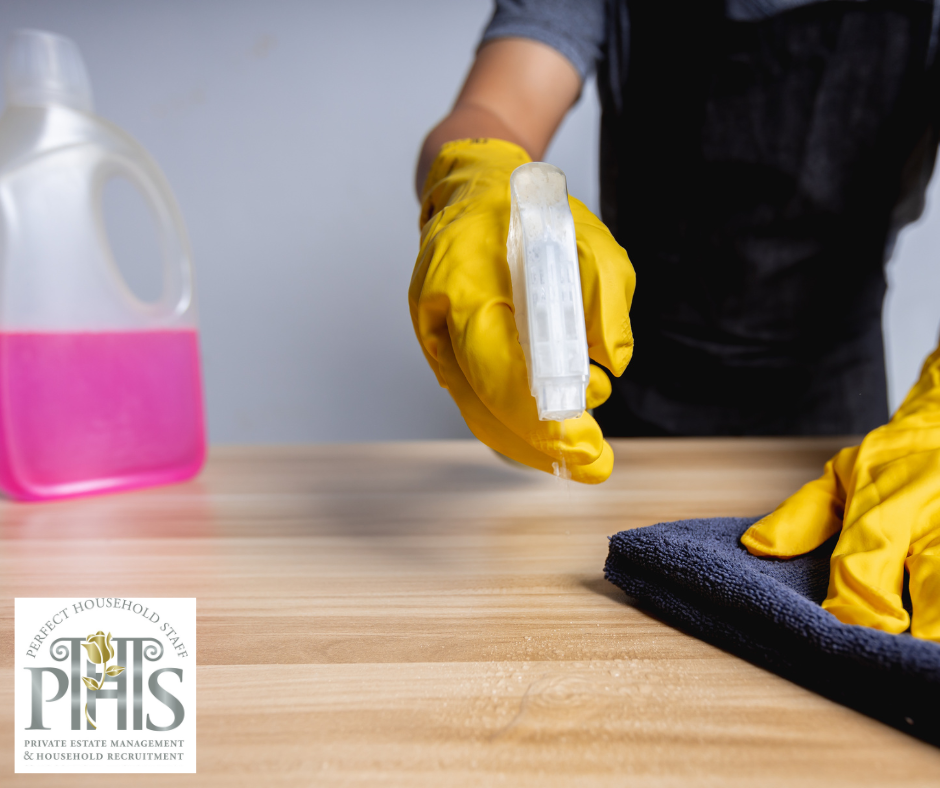
Proper personal protective equipment (PPE) for cleaners can prevent many health issues:
- Gloves: Protect your skin from harsh chemicals.
- Knee pads: Prevent long-term joint damage when kneeling.
- Non-slip footwear: Helps prevent slips and falls on wet surfaces.
- Masks: Especially important when using strong-smelling or aerosol products.
Using the correct protective gear is one of the most effective cleaning safety tips, helping housekeepers minimise risks and maintain a safe working environment.
3. Chemical Safety Cleaning Tips: Handle Products with Care
Incorrect use of cleaning agents can result in chemical burns, eye damage or breathing issues.
Follow these chemical safety cleaning tips:
- Always read labels: Never use a product without reading the instructions.
- Never mix chemicals: Especially bleach and ammonia — the result is toxic gas.
- Ensure ventilation: Open windows or doors when cleaning with strong products.
- Store securely: Keep products out of reach of children and clearly labelled.
Following these chemical safety cleaning tips will help you protect your health and prevent accidents while handling cleaning products.
4. Prevent Slips, Trips, and Falls
Housekeepers often work in environments with potential hazards, where a simple oversight can lead to serious injury. To minimise risks and maintain a safe workspace, follow these essential cleaning safety tips:
- Keep walkways clear: Remove loose cables, clutter, and misplaced items that could cause trips or falls.
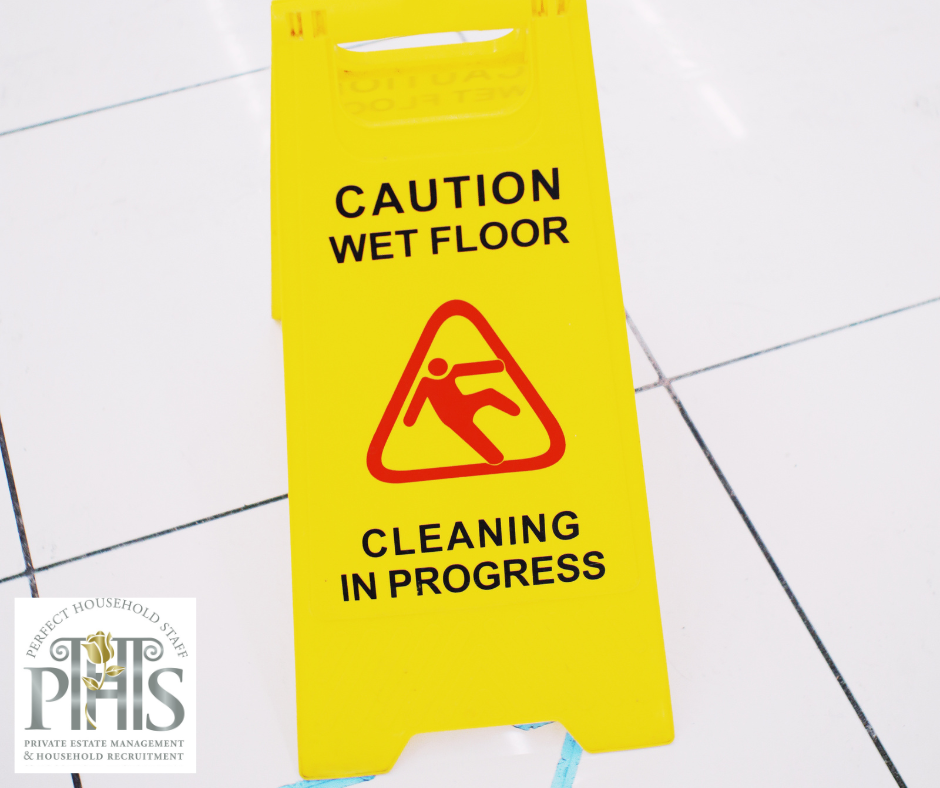
- Use proper signage: Always place “Wet Floor” signs when mopping or after a spill to alert others and avoid accidents.
- Wipe spills immediately: Clean up water, grease, or other liquids as soon as they occur to prevent slipping hazards.
- Secure rugs and mats: Ensure rugs have non-slip backing or are taped down to avoid shifting underfoot.
- Work in well-lit areas: Adequate lighting helps spot potential hazards before they cause harm.
Preventing slips and falls is one of the most important health and safety tips for housekeepers, helping you stay safe while delivering high-quality service.
5. Practice Good Posture and Take Regular Breaks
Long periods of repetitive motion can wear you down. These safe working posture tips help maintain your health:
- Maintain good posture: Avoid hunching or overreaching.
- Change tasks often: Alternate between high and low activity jobs.
- Take regular breaks: Short rest periods keep you fresh and focused.
Maintaining good posture and taking regular breaks are essential health and safety tips for housekeepers to prevent fatigue and reduce the risk of injury on the job.
6. Know Emergency Procedures
Being prepared can make all the difference:
- Locate first aid kits: Know where they are and what they contain.
- Report incidents immediately: Don’t delay reporting injuries or hazards.
- Take a first aid course: Knowing how to respond quickly is invaluable.
Understanding emergency procedures is a vital part of how to avoid injury while cleaning, as it prepares housekeepers to act swiftly and minimise harm in the event of an accident. Keeping first aid supplies accessible and reporting incidents immediately are essential cleaning safety measures that support a safe and professional work environment.
Partner with Perfect Household Staff for Safe, Successful Careers
Your safety matters. Following these health and safety tips for housekeepers will help prevent injuries, boost job satisfaction, and elevate your professional reputation. If you're a housekeeper seeking new opportunities or career guidance, contact Perfect Household Staff today — we're here to support your success every step of the way.
Ready to work with a team that truly prioritises your wellbeing? Register with us now or explore current vacancies to take the next step in your professional journey.
Are you an employer looking for trustworthy, well-trained housekeeping professionals? At Perfect Household Staff, we take pride in providing carefully vetted candidates who prioritise safety, discretion, and excellence. Get in touch with us today to find the ideal housekeeper for your home.
Contact Perfect Household Staff 📞✉️
We’re here to help housekeepers and employers alike. Reach out for expert support and reliable domestic staffing solutions.
- Phone: +44 (0)20 3318 4468 📞
- Email: ✉️
- Website: www.perfecthouseholdstaff.co.uk 🌐
We look forward to connecting with you and supporting your housekeeping needs.
Frequently Asked Questions
What are the top risks for housekeepers in private households?
Common risks include musculoskeletal injuries from lifting, chemical exposure, slips and falls, and repetitive strain injuries. Proper training and equipment significantly reduce these risks.
How can I safely use cleaning products in a home with children or pets?
Always use child-safe, pet-friendly products, store chemicals securely, ventilate well during cleaning, and avoid leaving products unattended.
Do I need formal training to become a professional housekeeper in the UK?
While formal qualifications are not always required, training in health and safety, manual handling, and COSHH regulations is highly recommended.
How do employers ensure the safety of their housekeepers?
Reputable employers provide clear safety protocols, PPE, access to training, and a safe, well-maintained working environment.